
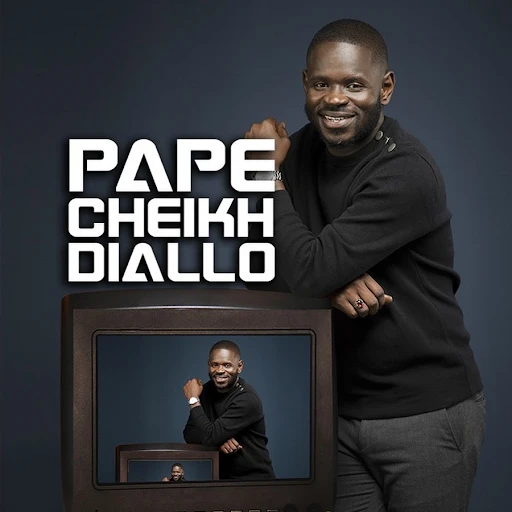
Pape Cheikh Diallo, a well-known television host, and famous singer/musician Djiby Dramé are in custody alongside 12 other men accused and charged with committing “unnatural acts,” a crime referring to gay sex, Senegalese media report.
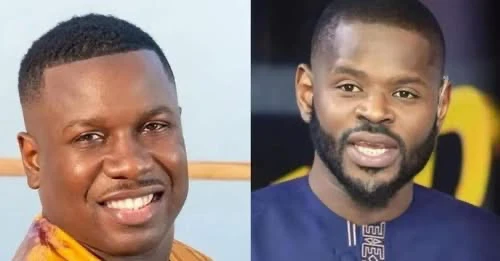
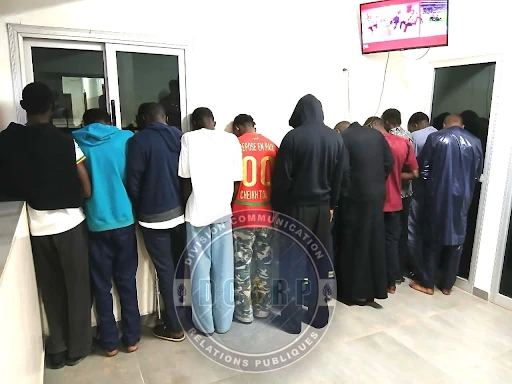
The celebrities Pape Cheikh Diallo and Djiby Dramé and their co-defendants were arrested between February 4th and 6th and appeared before the public prosecutor at the High Court of Pikine-Guédiawaye, outside the capital Dakar, on Monday, Feb. 9th. The police said in a statement that the case began with investigations into an HIV-positive individual who had “confessed to knowingly infecting about ten other people he had contacted, primarily through WhatsApp groups.”
According to ‘Les Échos’ in its edition of Tuesday, February 10, the investigating judge has brought serious charges against the defendants, including criminal association, endangering the lives of others, voluntary transmission of HIV, and money laundering. Eight of the 14 suspected homosexuals brought before the court were tested and confirmed to be HIV/AIDS positive by Senegalese health authorities, according to SeneWeb News, the first outlet to break the news to the Senegalese public on Friday, Feb. 6th. The more than a dozen accused have been remanded in custody and are now awaiting trial.
The Mass Arrest of the Accused:
The case, described by the Senegalese media as one of the country’s most high-profile anti-gay cases in years in a nation
that has become “increasingly intolerant of gay and gender-fluid people in recent decades,”
began with the arrest of a 20-year-old electrician, Pape Thiam, by the gendarmerie’s research brigade of Keur Massar, outside the capital Dakar. Analysis of Thiam’s iPhone 11 revealed the existence of several WhatsApp groups and websites organizing sexual encounters. The risk of HIV transmission is causing serious concern among Senegalese, and the ongoing investigation points to possible further arrests. Separately, a horrific pedophile ring spearheaded by a French national identified as Pierre Robert has led to 14 arrests; the West African nation’s authorities described it as a transnational pedophile network involved in organized pimping, rape of minors under 15, sodomy, and intentional transmission of HIV/AIDS.
The network, according to Ground News, appeared to target a particularly vulnerable part of the Senegalese population called ‘Talibé’: children who are sent to Islamic (Koranic) boarding schools but often find themselves forced to beg for their upkeep on the streets of Senegal. The accused are said to be accomplices of Pierre Robert, currently imprisoned in France. Robert had established a network to deliberately infect young people with HIV/AIDS through sexual intercourse. Several pornographic videos were filmed in Senegal, where he owns real estate. To target his network, the French justice system issued a rogatory commission, carried out in Dakar in collaboration with the Criminal Investigation Division (DIC).
The Celebrities: Who Are Pape Cheikh Diallo and Djiby Dramé?
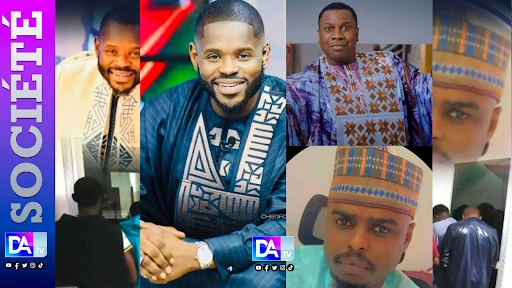
Cheikh Ahmed Tidiene Diallo alias Pape Cheikh Diallo, 43 years old and divorced, is a television and radio presenter, entrepreneur and event host, well known across Dakar and the Diaspora, and his face is ubiquitous in Senegal, staring down from billboards across the West African country. Diallo started his television career at the age of 20, spanning over two decades of celebrity career mostly interviewing celebrities and religious leaders on Télévision Futurs Médias (TFM), Senegal’s most-watched TV channel, which was founded by the famous singer and musician Youssou N’Dour. Pape also has a huge social media following, including on TikTok, where he is followed by over 3 million subscribers and is particularly popular among young viewers.
In late 2025, the TV star founded the first Senegalese vodcast, a podcast aired weekly on YouTube and other podcast platforms, featuring exclusive interviews, moving testimonials, inspiring life stories, and previously unreleased revelations in an authentic and unfiltered format. Dubbed “Face à Pape Cheikh”, the show is dedicated to the great moments in the public and private lives of Senegalese people and has over 200K followers on YouTube.
Singer Djiby Dramé, who is in his 40s and sings mostly in the Soninké and Bambara languages, is popular with an older crowd. He often performs with his wife, the singer Maman Chérie, and their duets are staples at Senegalese weddings and naming ceremonies. He is known for hosting an annual high-society gala — a celebration of Bazin, a luxurious damask cotton fabric worn for special occasions across West Africa. Both celebrities are viewed as highly respectable family men. Reports indicate that both Diallo and Dramé admit to having a sexual relationship with banker Doudou Lamine Dieng, who mentioned both celebrities’ names during interrogation.
Reports further indicate that the announcement of their imprisonment caused a stir in the judge’s chambers on Tuesday, Feb. 10th. All the defendants burst into tears upon realizing the gravity of the charges against them. Visibly affected, Pape Cheikh Diallo made a poignant impact on the courtroom with a sobbing declaration: “I am not a criminal…” (as quoted by Les Échos). The news website SeneWeb quotes the head of ‘Stop Homophobie’, a Paris-based gay rights group which regularly comes to the aid of victims of discrimination in Senegal. The group condemned the arrests, saying they will expose LGBTQIA+ people to further stigma in a devoutly Muslim Senegal, where homosexuality is punishable by prison. The arrests followed coordinated raids at the suspects’ homes in Dakar and in the city of Kaolack, about 200 km southeast of the capital. Senegalese police said the operation was carried out in cooperation with French authorities. Opinions circulating on Senegalese social media suggest the celebrities’ fame could influence how fans view homosexuality. “There’s going to be some scapegoating of the celebrity class, but also awareness-raising,” said a commentator.
Human Rights Defenders and Public Opinion
According to AFP News, “STOP Homophobia expresses its concern over these arrests,” Terrence Khatchadourian, secretary general of the Paris-based association, which regularly helps Senegalese people who are victims of discrimination in their country, told AFP. “This case is a reminder that in Senegal, sexual relations between consenting adults remain criminalized, exposing LGBTQIA+ people to arbitrary arrests and stigmatization,” Khatchadourian continued.
In this country where homosexuality is widely considered a deviance and discrimination against the LGBTQ+ community is regular, the case is stirring up social networks and making headlines.
In recent years, the issue of homosexuality has often stirred up Senegalese society, with some seeing it as a Western value incompatible with their own. Several demonstrations called for by religious associations have taken place in recent years to demand harsher penalties.
While still in the opposition, the current Senegalese Prime Minister, Ousmane Sonko, regularly promised to toughen the repression of homosexuality. Having become head of government, he warned Westerners in May 2024 that their activism in favor of homosexuals and sexual minorities could become a “new casus belli”. In October 2023, images showing a lively crowd surrounding what was presented as the body of a gay man, exhumed to be burned, sparked outrage. Similar events have occurred repeatedly across the country. According to a report, in 2021, Senegal was removed from the list of safe countries of origin by the French Office for the Protection of Refugees and Stateless Persons (OFPRA), due to risks related to sexual orientation. Following the latest arrests, the former French colony’s police have pledged to step up efforts to pursue and dismantle criminal groups whose activities “pose real threats to public health.”
LGBTQI / Homosexuality – a Taboo in Most African Countries, Including Senegal
The New York Times reports that Senegal has become increasingly intolerant of gay and gender-fluid people in recent decades, experts say. Homosexuality is punishable by up to five years in prison and a fine of more than $2,700. But citizen groups have campaigned for harsher punishments. “This case is happening in a context that is very charged, politically and culturally,” said Babacar M’Baye, a professor at Kent State University who has written about sexuality in Senegal. “There are groups that misrepresent the issue of homosexuality as something abnormal. The homophobic sentiments are extremely strong.” They are Senegal’s most high-profile anti-gay cases under a government that came to power in 2024 on a wave of youth support. The history of LGBTQ people in Africa is complex and diverse.
In many cases, colonized African governments were forced to adopt laws that criminalized homosexuality. In addition to the legal challenges, LGBTQ+ people in Africa also face social stigma and discrimination. This can make it difficult for them to live openly and authentically. However, there is a growing community of LGBTQ+ people in Africa who are working to create a more inclusive and accepting society.